

How Much Money Can You Lose In A 401k
Here's Why 40% of 401(k) Savers Could Lose Out on Lots of Money
When you have a 401(k), it's important to pay attention to the details.

Key Points
- Your goal in funding a 401(k) should be to grow as much retirement wealth as you can.
- If you're not careful, you could end up with a lower ending balance in your plan than you'd like.
Contributing to a 401(k) plan is one of the most efficient ways to accumulate wealth for retirement. But new data reveals that many savers may not be getting the most out of their employer plans. That's because roughly 40% of 401(k) plan participants don't fully understand what fees they're paying, according to a report released Thursday by the Government Accountability Office.
Are you in the dark about your 401(k)?
About 87 million workers have access to 401(k)s. But a lack of knowledge with regard to 401(k) fees could cause savers to lose out on a lot of money over time.
There are two kinds of 401(k) fees you'll need to look into -- administrative and investment. Administrative fees aren't really within your control (though you can opt to save in an IRA over a 401(k) if your plan's fees are out of hand). But you do have the ability to keep your investment fees to a minimum.

Image source: Getty Images.
There are a few different types of funds you'll generally find in a 401(k), keeping in mind that these plans generally don't let you buy individual stocks:
- Target date funds
- Actively managed mutual funds
- Passively managed index funds
When you first sign up for your company's 401(k) and you don't specify your investment choices, you'll generally be put into a target date fund automatically. These funds are designed to invest more aggressively at the onset and shift toward safer investments as their designated milestones get closer. Target date funds aren't perfect for a number of reasons, one of which is that they can charge expensive fees that take away from the returns they might manage to generate.
Actively managed mutual funds, meanwhile, are notorious for charging high fees. The logic is that you're paying for the expertise of a fund manager whose job is to select a unique mix of stocks (or other investments) to help your money grow.
Actively managed mutual funds can deliver high enough returns to make up for their hefty fees -- sometimes. But often, index funds are able to match the performance of actively managed funds or even outpace it.
Index funds are passively managed funds that aim to track the performance of different market benchmarks. An S&P 500 index fund, for example, will have the goal of performing comparably to the S&P 500 itself.
If your goal is to minimize the investment fees you're charged in your 401(k), then index funds are a good bet. And as mentioned, you may not end up compromising on performance one bit, since index funds commonly outperform their actively managed counterparts.
Don't sell your savings short
Chances are, you work hard to carve out money to contribute to your 401(k). So the last thing you want to do is lose out on stronger returns because fees keep eating away at them.
If your 401(k)'s administrative fees are too high, look at other savings options. At the same time, invest your money strategically so you can keep the fees you're paying to a minimum.
Motley Fool Returns
Stock Advisor S&P 500
681% 146%
Join Stock Advisor
Discounted offers are only available to new members. Stock Advisor will renew at the then current list price. Stock Advisor list price is $199 per year.
Stock Advisor launched in February of 2002. Returns as of 11/09/2021.
Cumulative Growth of a $10,000 Investment in Stock Advisor Calculated by Time-Weighted Return 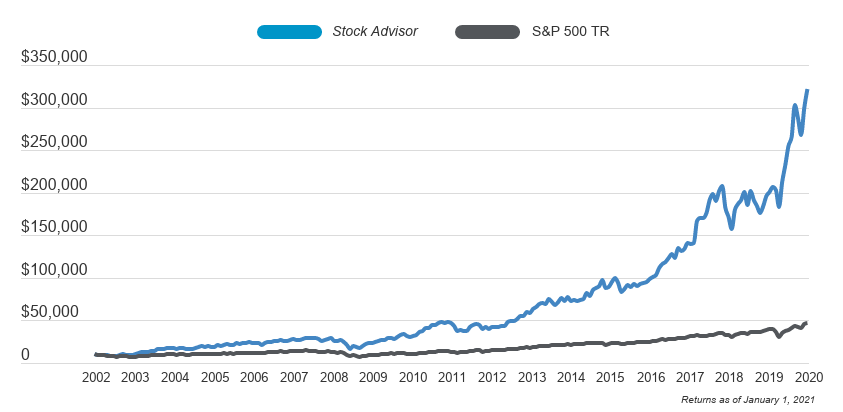
Related Articles
- How to Make Your Own Investing Luck
- 5 Stocks I Own and Will Add To If the Stock Market Crashes
- 4 Reasons to Rethink Your Early Retirement Plans
- 4 Social Security Rules Everyone Needs to Know
- Married? 3 Things You Need to Know About Social Security
How Much Money Can You Lose In A 401k
Source: https://www.fool.com/retirement/2021/08/30/heres-why-40-of-401k-savers-could-lose-out-on-lots/
Posted by: martinezawase1960.blogspot.com
0 Response to "How Much Money Can You Lose In A 401k"
Post a Comment